
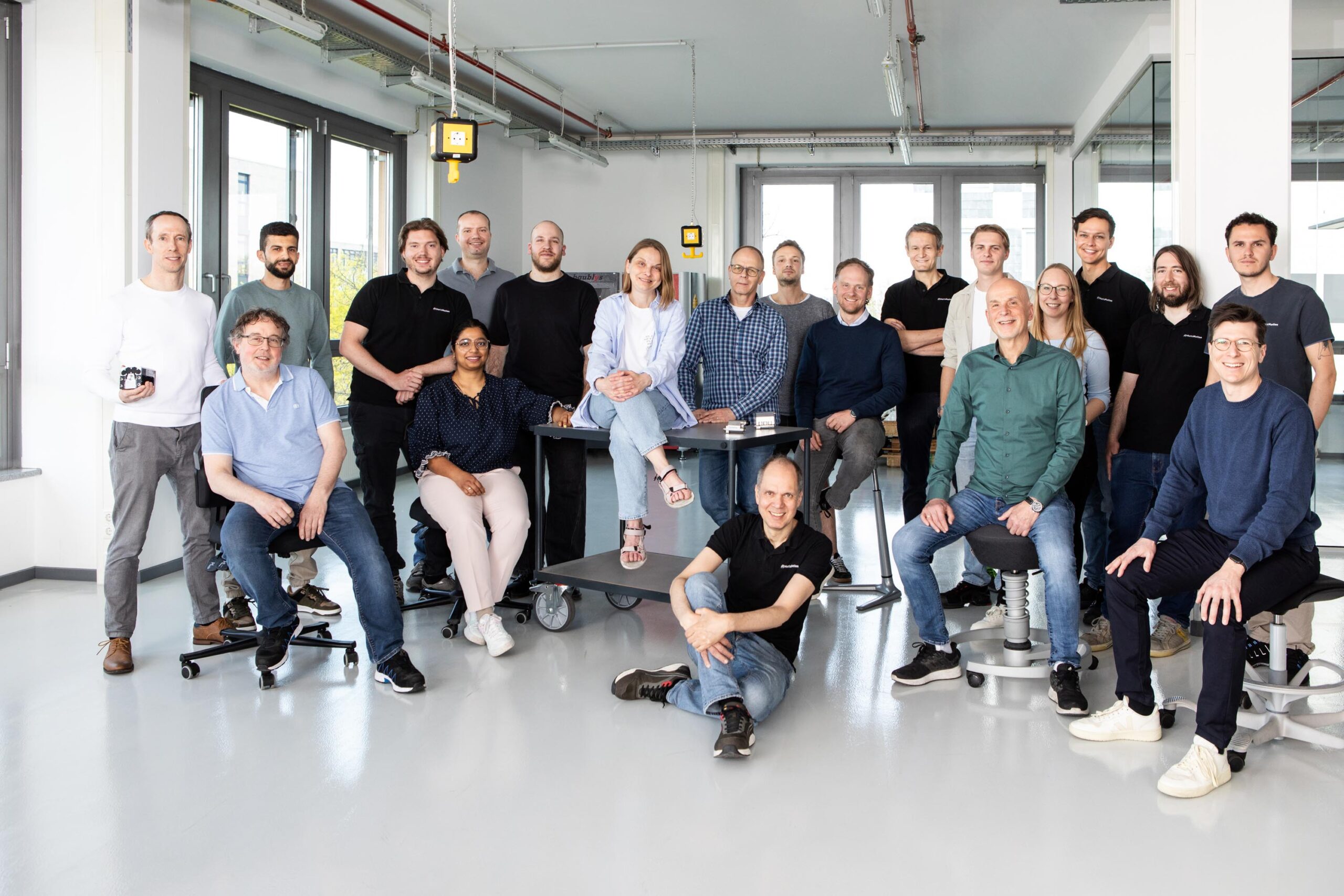
People Behind MetisMotion | Tomas Gisicius
From designing practical solutions for everyday life to developing production solutions at MetisMotion, Tomas Gisicius has always been driven by curiosity and a desire to understand how things work.
Meet Tomas Gisicius: Making Things Work Better
28 September 2026
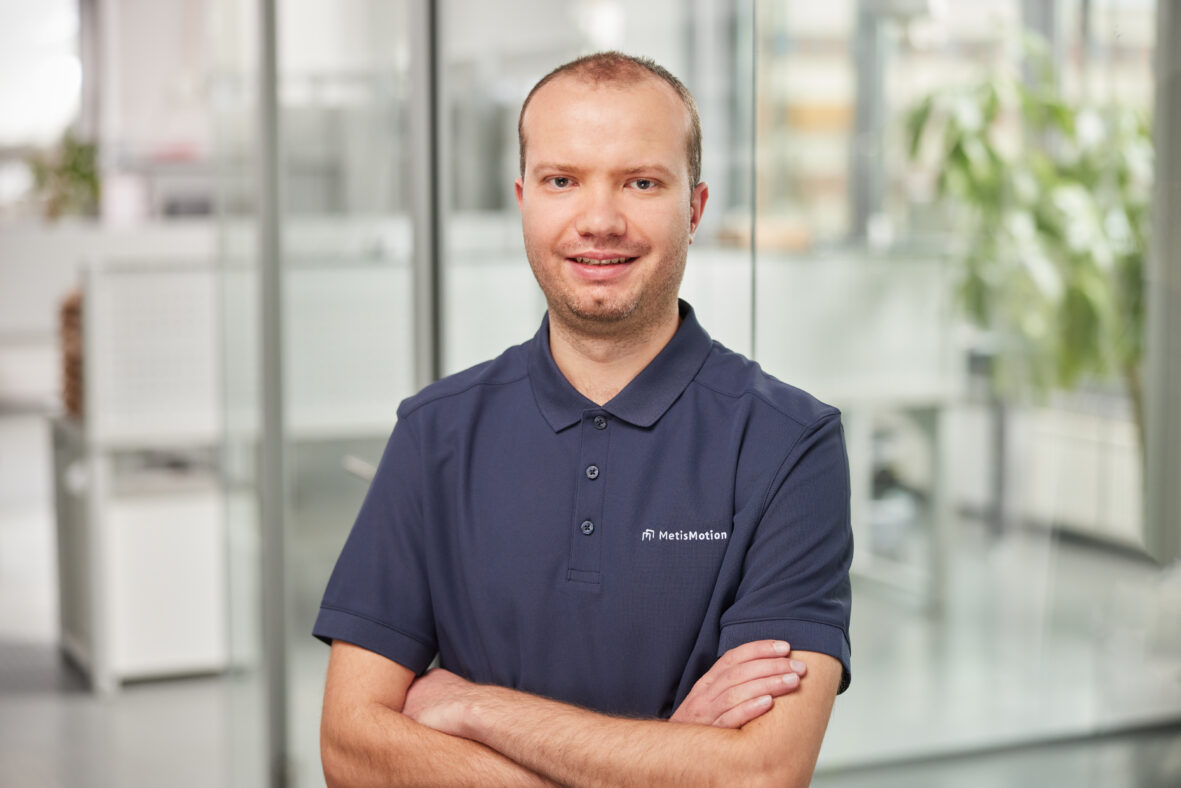
What if your instinct was always to take things apart, understand how they work, and then ask: “Can I make this better?”
For Tomas Gisicius, that curiosity has shaped both his career and the way he approaches everyday life — from building technical solutions and experimenting with CNC programming to designing practical solutions for everyday family life and repairing things with his children
At MetisMotion, he brings that hands-on mindset to mechanical engineering, production and problem-solving. In this interview, Tomas shares what drives his curiosity, what he has learned along the way, what makes a great team — and why sometimes you need to take one step backwards to move forward.
As a Mechanical Engineering Technician at MetisMotion, Tomas works at the intersection of mechanical engineering, production, testing and technical problem-solving. With a background spanning precision mechanics, university research, battery-cell development at BMW and actuator technology, he brings a strongly hands-on perspective to his work.
But there is more to Tomas than his technical expertise. He is naturally curious, enjoys taking on challenges, likes learning by doing and believes that good engineering starts with understanding how things work in the real world.
We sat down with Tomas to talk about his journey into engineering, his work at MetisMotion, teamwork, technology, family, continuous learning and what keeps him curious.
“I’ve always liked finding ways to improve things.”
Tomas, what originally inspired you to go into engineering and technology?
For me, engineering is very flexible. It opens up so many possibilities to improve things in everyday life.
You can repair a lot of things yourself instead of buying something new. In that way, you can also make things last longer and avoid replacing things unnecessarily.
But you can also develop completely new solutions that make everyday life easier. Think about something as simple as a washing machine. Technology can take a task that used to be difficult or time-consuming and make it much easier. That combination has always interested me: understanding how something works and then asking yourself, “Can I make this better?”
I still do this in everyday life.
For example, I once needed a phone holder for my car, but I couldn’t find one that fit exactly the way I wanted. So I drew my own design and printed it. It fitted my car perfectly. The same thing happens at home. If my wife needs something for organising things and we can’t find exactly what we need, I think: Why don’t we just make it?
I enjoy that.
And now I also have my children involved. When they break something, we sometimes repair it together. It gives me the opportunity to explain how things work and show them that something being broken doesn’t necessarily mean it needs to be thrown away. Maybe one day my son will become an engineer too. He already has some very interesting ideas. He just needs to learn how to make them real.
And sometimes the unrealistic ideas are the most interesting ones.
From precision mechanics to actuator technology
Your career has taken you through research, manufacturing, battery technology and now actuator development. How did that journey develop?
My background is very hands-on.
I started as a precision mechanics technician and spent several years at the LMU Munich research workshop, where I worked on precise components for research projects and applied different manufacturing processes.
Later, I studied part-time at the Technikerschule München and became a state-certified Mechanical Engineering Technician, specialising in production planning and control.
At LMU, I worked directly with researchers and professors on their projects. They would come to me with an idea, and I would take care of the mechanical side. They might explain what they wanted to achieve. Then I would create a 3D model, discuss it with them, adapt the design, produce the drawings, organise the materials and tools, and finally manufacture the parts. So I was involved from the initial idea all the way to the finished solution.
I really liked that way of working because you could see the complete journey from an idea to something that actually existed.
Some of the projects I worked on also contributed to scientific publications, including research published in Nature Communications.
You also worked at BMW. What did you take from that experience?
At BMW, I worked in battery-cell development. I was involved in the development of production equipment and processes such as mixing and coating for electrode manufacturing.
It was another development environment, but with a different scale and focus. Interestingly, the team I worked in was actually quite small — around twelve people. And although BMW is a huge company, decision-making within our development team could be surprisingly straightforward. If you found an improvement, you could go to your team lead, explain the idea and get a decision. If the answer was yes, you implemented it.
That taught me something important: a big company doesn’t automatically have to mean slow decisions, and a small company doesn’t automatically mean fast decisions.
The way processes are designed makes a big difference.
What excites you most about your work at MetisMotion?
I enjoy working on technical challenges where you can see a direct connection between an idea and the finished result.
That can mean developing a fixture, building a test setup, analysing a technical problem or finding a better way to approach a production task.
What interests me most is the practical side: taking something from a drawing or an idea and seeing how it behaves in reality.
Sometimes I look at a drawing and think, “We could do this differently.” Then I discuss it with colleagues or test an alternative myself. I’m very much a practical person.
Not everything that works in theory works in reality. I’m more the guy from reality.
That practical perspective is probably one of the things I bring most strongly to my work.
What have you learned since joining MetisMotion?
I’ve learned that even simple tasks can become complicated.
I’ve also learned a lot about a technology that was completely new to me.
For example, I learned a new production step — honing. It’s interesting to understand how it works and why it is needed. I also learned a lot from the people here.
There are many interesting and very different people at MetisMotion, and that is something I appreciate.
And then there are the things I teach myself when I see a need. For example, when the colleague who used to program our CNC machine left, I remembered that I had worked with CNC programming before. So I took over. But this time, we were working with five-axis programming, which was something I hadn’t done before. So I watched YouTube videos, learned what I needed to learn and started doing it. I like that!
If something needs to be done and I don’t know how to do it yet, my first thought isn’t necessarily “I can’t do it.” It’s more like: “Okay. How do I learn this?”
You’ve worked in environments ranging from a university research workshop to BMW and now a deep-tech startup. What feels different about working at MetisMotion?
MetisMotion reminds me in some ways of the work I did at the university research workshop. There, someone could come to me with an idea and I could take care of the mechanical side from the beginning to the end.
At MetisMotion, I see something similar. We’re developing something new, and you never completely know what the next day will bring. You can plan your day in the evening and then come to work the next morning and discover that everything has changed.
That can be challenging. But it is also exciting.
You come to work and think: “Okay, what’s happening today?”
I like that.
You are very hands-on in the way you approach technical problems. What have you learned about turning a good idea into a practical solution?
I’ve learned that the technical solution is only one part of the process.
You first need to understand the actual problem. Then you need to test whether your idea works in practice and whether it really helps the people who will use it.
At MetisMotion, we are developing and growing quickly, so there is always something new to solve. For me, the important thing is finding the right balance between structure and flexibility.
There are situations where documentation, testing and formal processes are essential — especially when quality, safety or customers are involved. At the same time, I think it is important to keep enough flexibility to experiment, learn from the result and move forward.
I enjoy exploring and testing new ideas while ensuring that the necessary quality and safety requirements are respected. There is even a box on my desk where I put some of my improvements. People know about it, and if they see something there that could help them, they can ask me about it.
Knowing the technology before making decisions
You have also mentioned an interest in becoming a team leader. What would good leadership mean to you?
If I became a team leader, I would definitely still do the necessary paperwork — but I would want it to be the minimum the company actually needs.
The people should have enough structure to work effectively, but not so much bureaucracy that the structure becomes the work.
And I think technical knowledge is very important for a leader in our environment. I believe good technical leadership combines an understanding of the technology with strong communication and the ability to recognise each team member’s strengths
With our actuators, for example, you need to know what they can do and where their limits are.
Then you can make a decision and say, “This is still okay,” or, “No, this is critical. We need to look at it more closely.”
I don’t have a problem making decisions when I understand what my decision means.
You have a very clear view of teamwork. What makes a good team?
For me, good teamwork starts with a good team lead.
A team lead needs to understand what has to be done and know the people in the team: what they are good at, what they enjoy doing, where they are fast and where they may need more support. Then you can distribute the work fairly.
But I don’t think leadership means simply saying: “You do this. You do that. You do that.” The team should be involved in the discussion and agree on how the work should be done. At the same time, I don’t think it works to say: “You guys decide everything yourselves.” Then you can quickly end up with chaos. Two people might work on the same thing without knowing it, while another important task is nobody’s responsibility.
You need an overview first. Then the team can discuss who wants to do what and who is best suited for which task. And sometimes there are simply tasks nobody wants to do. That’s where a team lead has to step in and help find a fair solution.
Even as a team member, I sometimes buy a beer for someone who takes on one of those less enjoyable tasks. Because I understand what it’s like to come to work knowing that you have to do something you really don’t want to do.
For me, teamwork means helping each other.
And when the people around me are happy because I helped them, that makes me happy too.
What do you appreciate most about your colleagues?
When I help someone and I see that they are happy because I helped them, that’s enough for me. For me, seeing happy colleagues is the best appreciation. That’s probably one of my biggest motivations.
I like making people’s lives easier.
What is the most interesting challenge you are working on right now?
For me, every day is a challenge.
Something that looks like a huge challenge to one person might be a normal day for me.
Even something like being stuck in traffic becomes a challenge: How can I get there faster?
I enjoy that way of thinking.
For me, a challenge is fun.
If there were no challenges, things would get boring very quickly. Always learning something new
Where does your interest in programming come from?
I’ve always been interested in making work easier. When I was building my house, for example, I was doing things manually and eventually thought, “This is taking way too long.” So I started looking for a better way. That’s how I got into programming.
Instead of manually doing everything, you can tell the machine what to do and let it handle repetitive or complicated work. I’ve always had this instinct.
I’m always trying to make my life easier. And I don’t mean that in a lazy way.
I mean finding a better method so that you can spend your energy on something more useful.
What does a small daily win look like for you?
Learning something new.
It doesn’t have to be something related to technology or work. It doesn’t even have to be something big.
As long as I learned something new during the day, the day was a win for me. Because then I wake up the next day knowing something I didn’t know yesterday.
So I’m a little better than I was the day before.
That’s enough.
What do you enjoy doing outside of work?
My family comes first.
I really enjoy spending time with my wife and my children. But I also need some time for myself. That’s sometimes difficult because there are only so many hours in a day.
And when you have a family, if you try to do nothing, your children will quickly find something for you to do. When I have time for myself, I usually try to switch off from whatever is occupying my head. Sometimes I watch a movie because I can concentrate on completely different things, or I play video games with friends. Sometimes I work on cars with my best friend or repair my son’s bicycle.
I like tinkering with technology.
I also enjoy watching documentaries about new technologies because I want to stay curious and understand what’s happening in the world.
Is there another skill you’d like to develop?
I’d like to learn more about programming. I have a strong mechanical background, but I don’t have the same level of knowledge when it comes to electronics and digital technology.
I’d like to change that.
If I had enough time, I’d love to learn how to develop a mobile application — maybe something that improves the quality of life for my family, for me, or for other people. Maybe even a game.
I think it’s important to keep developing in different directions. I already understand mechanical systems very well. Now I’d like to add more digital knowledge to that.
If you could solve one major problem in the world, what would it be?
If I could make one wish, I would wish that the world could work together instead of being divided into so many parts.
If people worked together rather than against each other, I think we could achieve much more.
But personally, there is also something even more important to me.
There is nothing deeper and bigger than family.
You describe yourself as a very open person. Is there a side of yourself you are currently trying to develop?
I’m actually trying to become a little less open. I’ve learned that openness is a strength, but it’s equally important to understand when and how to share things I don’t like when people use your weaknesses because you trusted them enough to share them.
At the same time, openness is a big strength. So I’m trying to find the balance. It’s not always successful because I’m simply used to being open. But I’m learning to think a little more carefully about what I share and with whom.
What would you tell someone young who wants to become a mechanical engineer or work in technology?
Take things slowly, but take them seriously. And if you don’t understand something, don’t be afraid to take a step backwards.
Go back and get the knowledge you need.
Understand it properly.
Don’t be afraid to take one step backwards. Only then can you move forward.
What are you most proud of?
My family. And myself.
That’s probably the achievement I’m most proud of.
Looking back at your career and your time at MetisMotion, what continues to motivate you?
I think it comes back to a few simple things. I like solving problems.
I like learning. I like technology.
And I like helping people.
When I can learn something new, work through a difficult challenge or help a colleague, I feel that I’ve achieved something.
And, of course, my family is my biggest motivation.
For me, there is nothing better than having happy people around me. So maybe it is quite simple:
Keep learning. Stay curious. And keep moving forward.
That’s what keeps me going.
Wir haben Ihr Interesse geweckt?
Hier gibt’s noch mehr!
- People Behind MetisMotion | Tomas Gisicius
- Piezohydraulic Actuators for the Next Generation of Humanoid Limbs
- People Behind MetisMotion | Shubhangini Awasthi
- People Behind MetisMotion | Admirim Sheholli

- Halftime in the EIC Accelerator – our midterm assessment

- Giving AI “the human touch” – MetisMotion @ automatica 2025

- naXture multi-actuator Solutions – Compact Power for Industry, Flexibility for the Future

- MetisMotion presents “Ultimate design flexibility for YOU!” with naXture @ automatica 2023

- MetisMotion – Join our SUCCESS STORY
Lernen Sie Shubha kennen – einen der neugierigen Köpfe hinter MetisMotion
5. August 2026
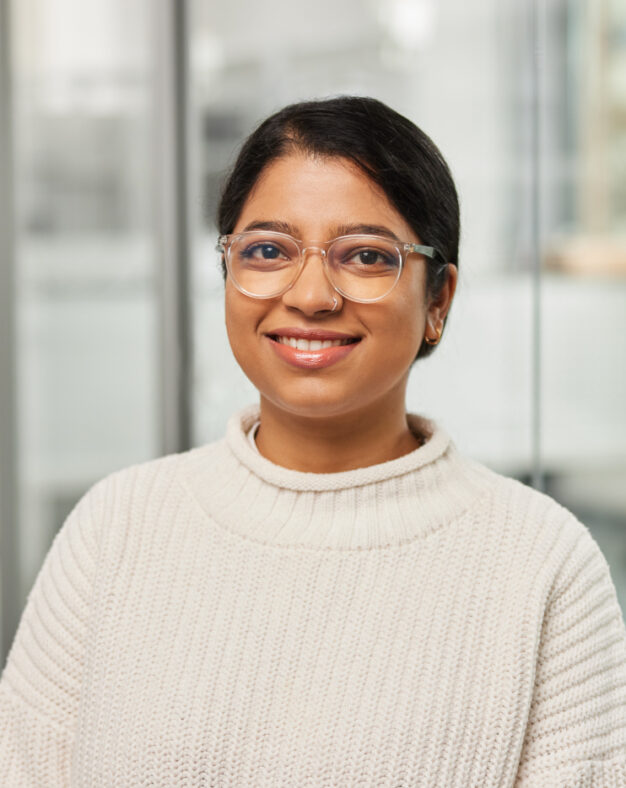
Manche Menschen entscheiden sich für das Ingenieurwesen, weil sie gerne Probleme lösen.
Andere, weil sie einfach nicht aufhören können, nach dem Warum zu fragen.
Lernen Sie Shubhangini (Shubha) Awasthi kennen, die bei MetisMotion die Zukunft der Bewegung mitgestaltet.
Ursprünglich aus Indien, baute Shubha ihren akademischen Werdegang rund um das Verständnis komplexer physikalischer Systeme auf – vom Chemieingenieurwesen über einen Master in Computational Fluid Dynamics bis hin zu einer Promotion mit Fokus auf numerische Simulation und pharmazeutische Prozessmodellierung, in Zusammenarbeit mit Daiichi-Sankyo und der Universität Kiel.
Ihr Weg wurde stets von Neugier geleitet. In ihrer Kindheit entfachten unzählige Gespräche mit ihrem älteren Bruder ihre Faszination für Mathematik, Physik und das Verständnis dafür, wie Dinge funktionieren. Während er sich später für die Finanzwelt entschied, entstand aus diesen frühen Diskussionen eine lebenslange Leidenschaft für das Ingenieurwesen, die sie bis heute antreibt.
Heute kombiniert sie bei MetisMotion Simulation, Mechanik, Elektronik, Hydraulik und digitale Zwillinge, um unsere Aktoren besser zu verstehen und komplexe Ideen in verlässliche Technologie zu verwandeln. Was sie jedoch am meisten motiviert, ist nicht nur das Lösen technischer Herausforderungen – sondern Wissen zugänglich zu machen und anderen zu helfen, die Systeme zu verstehen, mit denen sie täglich arbeitet.
Wir haben Shubha ein paar Fragen gestellt, um mehr über sie zu erfahren.
Was hat dich ursprünglich dazu inspiriert, ein Ingenieurstudium zu verfolgen?
„Meine größte Inspiration war eigentlich mein älterer Bruder. Er war schon als Kind immer neugierig auf Technik, und wir haben viel Zeit damit verbracht, darüber zu sprechen, wie Dinge funktionieren. Manchmal erklärte er mir Dinge, manchmal erklärte ich ihm die Physik dahinter. Diese Gespräche haben mich schon sehr früh für das Ingenieurwesen begeistert.
Im Laufe meines Studiums fühlte ich mich zunehmend zu Mathematik, Physik und Chemie hingezogen. Das Chemieingenieurwesen erschien mir als die perfekte Kombination dieser Interessen, und mit der Zeit entdeckte ich, dass ich es besonders genoss, mithilfe von Simulationen komplexe Systeme zu verstehen.”
Was hat dich an MetisMotion gereizt?
„Ich habe schon immer gerne mit Simulationen gearbeitet. Als ich von der Aktor-Technologie von MetisMotion erfuhr, war ich fasziniert, dass etwas so Kompaktes eine derart enorme Kraft erzeugen kann. Ich wollte verstehen, wie Mechanik, Elektronik und Hydraulik zusammenwirken, um ein so klimafreundliches Gerät zu ermöglichen.”
Was gefällt dir am meisten daran, Teil von MetisMotion zu sein?
„Die Menschen. Alle sind unglaublich hilfsbereit. Wann immer ich Unterstützung brauche, ist jemand da – ganz gleich, um welches Projekt oder welche Herausforderung es geht. Das motiviert mich nicht nur, mein Bestes zu geben, sondern auch, anderen zu helfen, wo ich kann.”
Was unterscheidet die Arbeit in einem Startup von deinen bisherigen Erfahrungen?
„In einem größeren Unternehmen existieren viele Prozesse bereits. In einem Startup entwickelt man sie gemeinsam. Manchmal weiß man nicht, wie der nächste Schritt aussehen wird, bevor man überhaupt mit dem aktuellen fertig ist. Das ist herausfordernd, aber auch unglaublich lohnend, weil man weiß, dass man die Zukunft des Unternehmens aktiv mitgestaltet.”
Was hast du seit deinem Einstieg bei MetisMotion gelernt?
“Electronics! I never imagined it would be so interesting. Understanding it through practical work rather than only from textbooks „Elektronik! Ich hätte nie gedacht, dass sie so spannend sein könnte. Sie durch praktische Arbeit zu verstehen, statt nur aus Lehrbüchern, hat meine Sicht darauf komplett verändert.”
Was macht deine Arbeit für dich bedeutsam?
„Meine Arbeit wird für mich bedeutsam, wenn sie anderen Menschen hilft. Ich erkläre gerne neuen Kolleginnen und Kollegen, wie unsere Systeme funktionieren, zeige ihnen Simulationen und erlebe den Moment, in dem plötzlich alles Sinn ergibt. Zu sehen, wie jemand etwas Neues versteht, ist eines der schönsten Gefühle.”
Wie würdest du MetisMotion in drei Worten beschreiben?
Innovation. Teamwork. Beharrlichkeit.
„Alle gehen immer weiter voran, auch wenn schwierige Probleme zu lösen sind. Das bewundere ich hier sehr.”
Welche Technologie begeistert dich derzeit am meisten?
“Zu sehen, wie unsere neuesten Aktor-Entwicklungen Druckverstärkung mit Ventiltechnik kombinieren, um aus einem so kompakten System mehr als 4.000 N Kraft zu erzeugen, ist faszinierend. Zu wissen, wie viel Arbeit in diese Ergebnisse geflossen ist, macht es noch spannender.”
Wenn du eine technische Herausforderung lösen könntest, welche wäre das?
„Ich würde gerne Simulationen entwickeln, die die Realität noch detaillierter abbilden können, während sie gleichzeitig schnell und effizient bleiben. Jede physikalische Wechselwirkung präzise visualisieren zu können, ohne dabei enorme Rechenleistung zu benötigen, würde einen enormen Unterschied machen.”
Was würde die Menschen an dir überraschen, abseits des Ingenieurwesens?
„Ich liebe es zu singen und zu tanzen – besonders mit meiner Tochter. Familie ist die Art, wie ich nach einer anstrengenden Woche neue Energie tanke. Wir verbringen gerne Zeit im Freien, oft mit Picknicks an einem der wunderschönen bayerischen Seen.”
Quick Facts
Traumberuf als Kind?
Herzchirurgin. Sie wollte Menschenleben retten, bevor die Mathematik sie schließlich zum Ingenieurwesen führte.
Worüber könntest du stundenlang reden?
Simulation.
Was möchtest du noch lernen?
Quantentechnologien und die zahllosen Möglichkeiten, die sie in Zukunft eröffnen könnten.
Welche Fähigkeit würdest du sofort meistern wollen?
Die tiefere Verbindung zwischen Verstand, Emotionen und Bewusstsein zu verstehen – eine lebenslange Faszination, inspiriert von der indischen Philosophie.
Welcher Moment im Alltag zeigt dir, dass du einen guten Tag hattest?
Jemandem zu helfen, etwas Neues zu verstehen.
Bei MetisMotion vereint Shubha wissenschaftliche Tiefe, echte Neugier und den Wunsch, stetig weiterzulernen. Ob sie Simulationen entwickelt, neue Technologien erkundet oder Kolleginnen und Kollegen hilft, komplexe Systeme zu verstehen – sie begegnet jeder Herausforderung mit Geduld, Bescheidenheit und der Überzeugung, dass es beim Ingenieurwesen letztlich darum geht, die Welt um uns herum zu verbessern.
Wir sind stolz, Shubha im Team zu haben, und freuen uns darauf, zu sehen, wohin ihre Neugier sie als Nächstes führen wird.
Wir haben Ihr Interesse geweckt?
Hier gibt’s noch mehr!
- People Behind MetisMotion | Tomas Gisicius
- Piezohydraulic Actuators for the Next Generation of Humanoid Limbs
- People Behind MetisMotion | Shubhangini Awasthi
- People Behind MetisMotion | Admirim Sheholli
- Halftime in the EIC Accelerator – our midterm assessment
- Giving AI “the human touch” – MetisMotion @ automatica 2025
- naXture multi-actuator Solutions – Compact Power for Industry, Flexibility for the Future
- MetisMotion presents “Ultimate design flexibility for YOU!” with naXture @ automatica 2023
- MetisMotion – Join our SUCCESS STORY